Rainbow Shelter: Designing Places That Everyone Can Enjoy
Great design should be for everyone.
During the Covid-19 lockdown, Stuart Melrose became involved in creating outdoor environments, shelters and sensory spaces for specialist schools supporting children with Special Educational Needs, including autistic children and young people with complex learning needs.
Many of these schools were residential, supporting pupils with a wide range of abilities and care needs. Each project therefore needed to balance creativity with sensitivity, creating spaces that felt safe, calming and enjoyable for every child.
The Rainbow Shelter became the studio’s favourite expression of that philosophy: a place designed simply to make people smile.
Designing Through Experience
This work is deeply personal. Following a diving accident that temporarily left him using a wheelchair, Stuart gained first-hand experience of how environments can either enable or exclude people.
After leaving hospital, he became an Inclusive Fitness Instructor, helping make fitness facilities more accessible for people with a wide range of abilities. He also volunteered at SeeAbility Heather House, supporting young people with complex disabilities, including visual impairment and life-limiting conditions, while establishing an after-school fitness club for children with additional needs.
Those experiences shaped his approach to inclusive design. Stuart would also like to acknowledge Lesley Walkden, an award-winning SEN headteacher whose knowledge, generosity and friendship profoundly influenced his understanding of designing for children with additional needs. Through countless conversations, Lesley helped shape an approach centred on joy, colour, curiosity and spaces children genuinely want to use.
More Than a Shelter
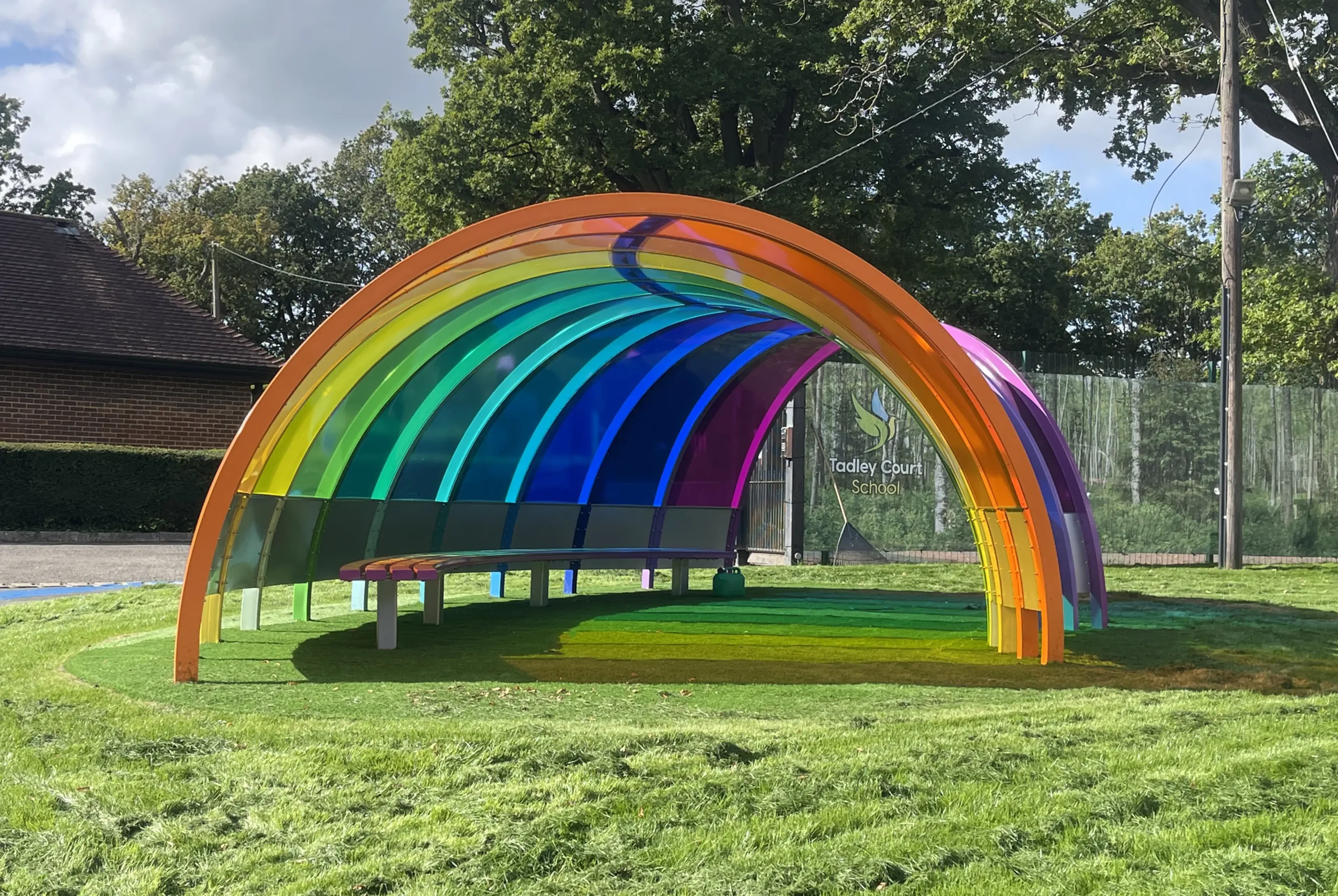
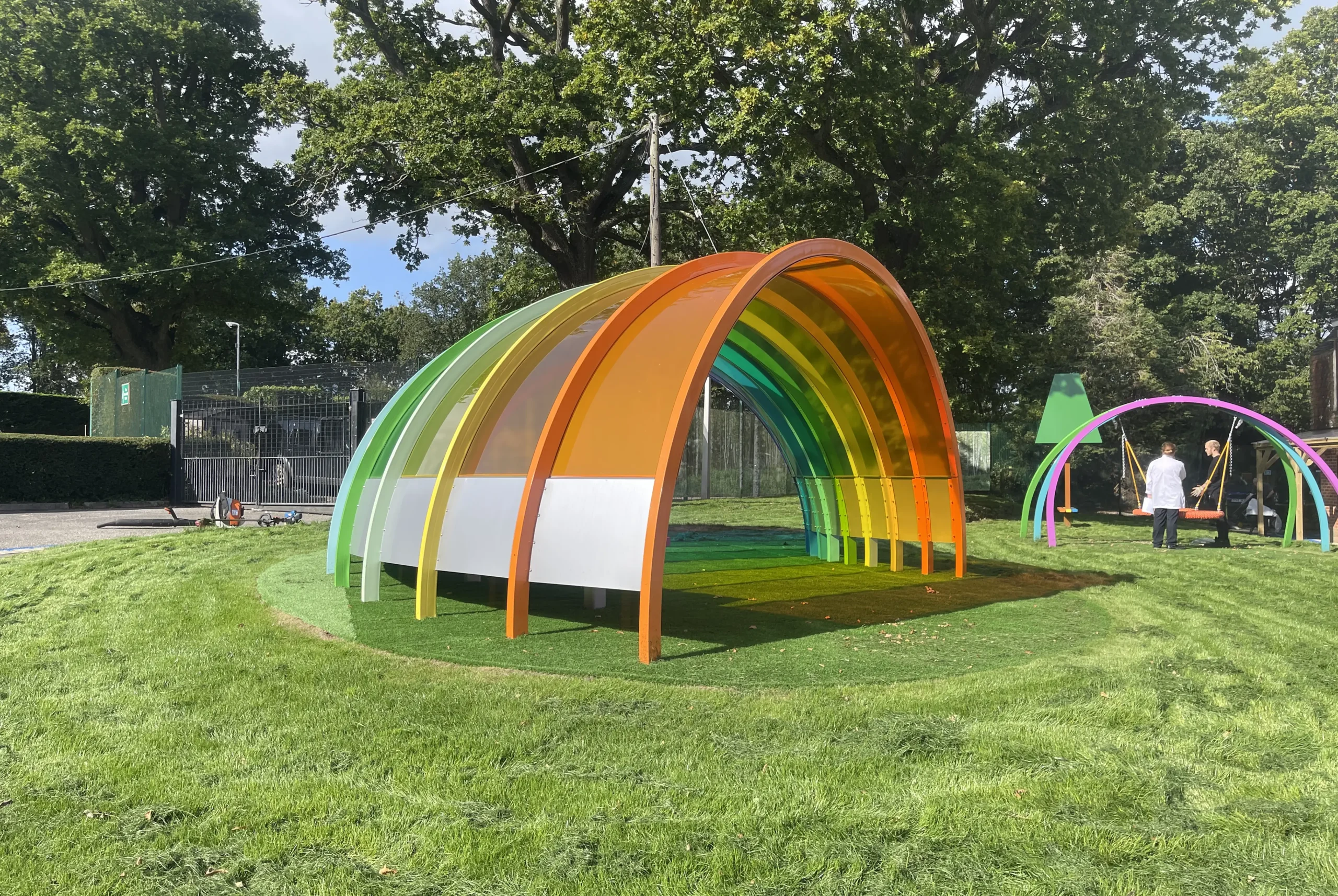
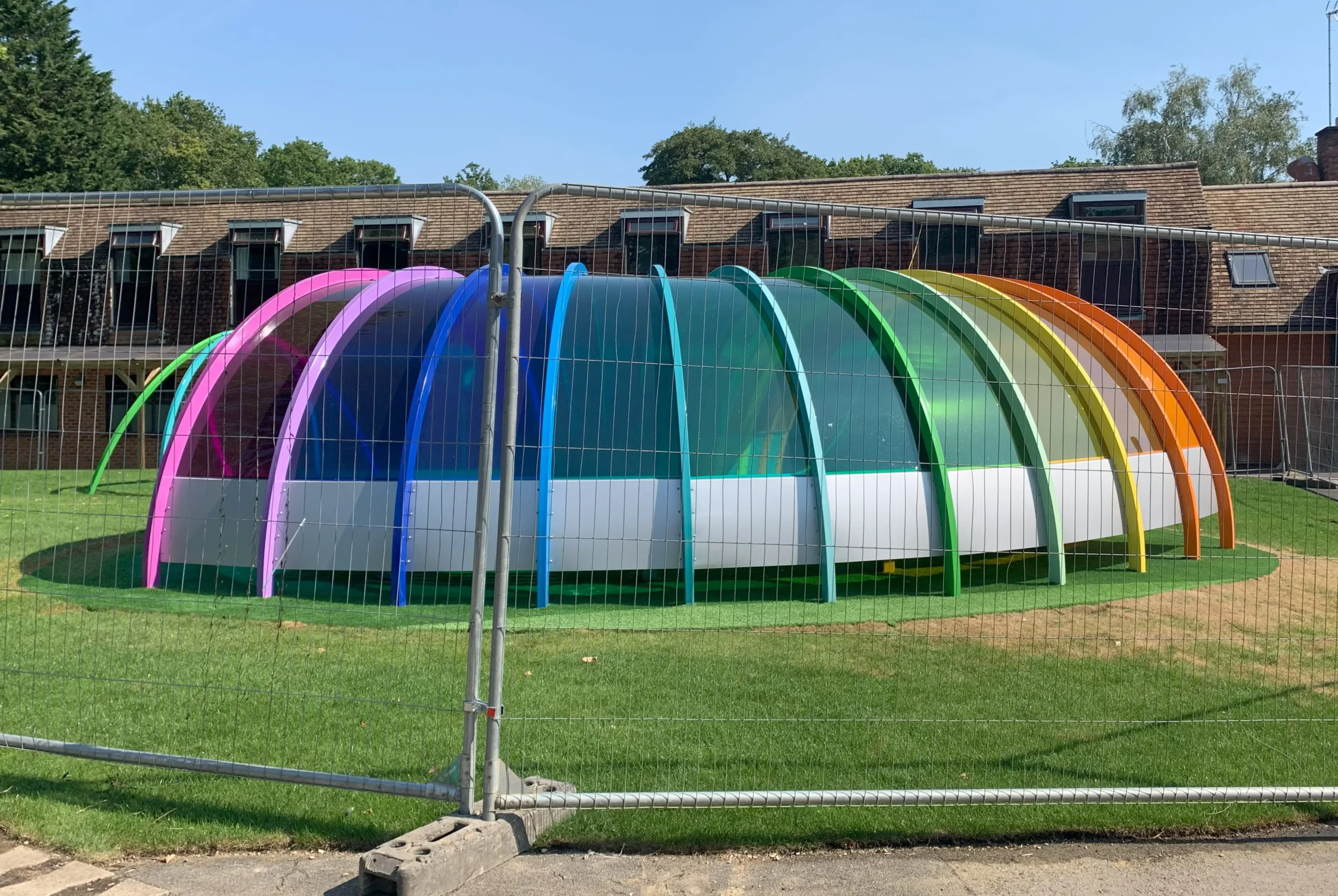
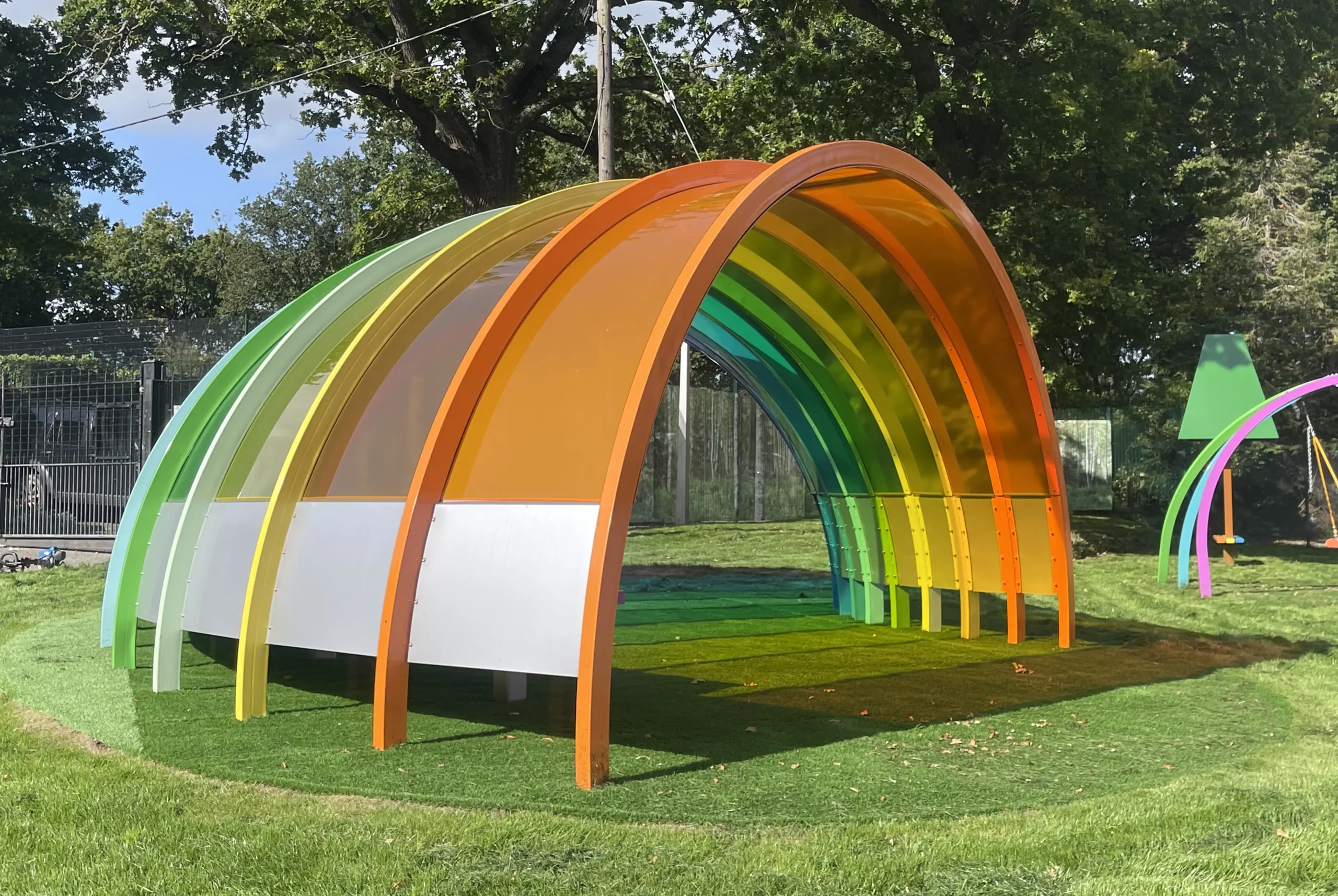
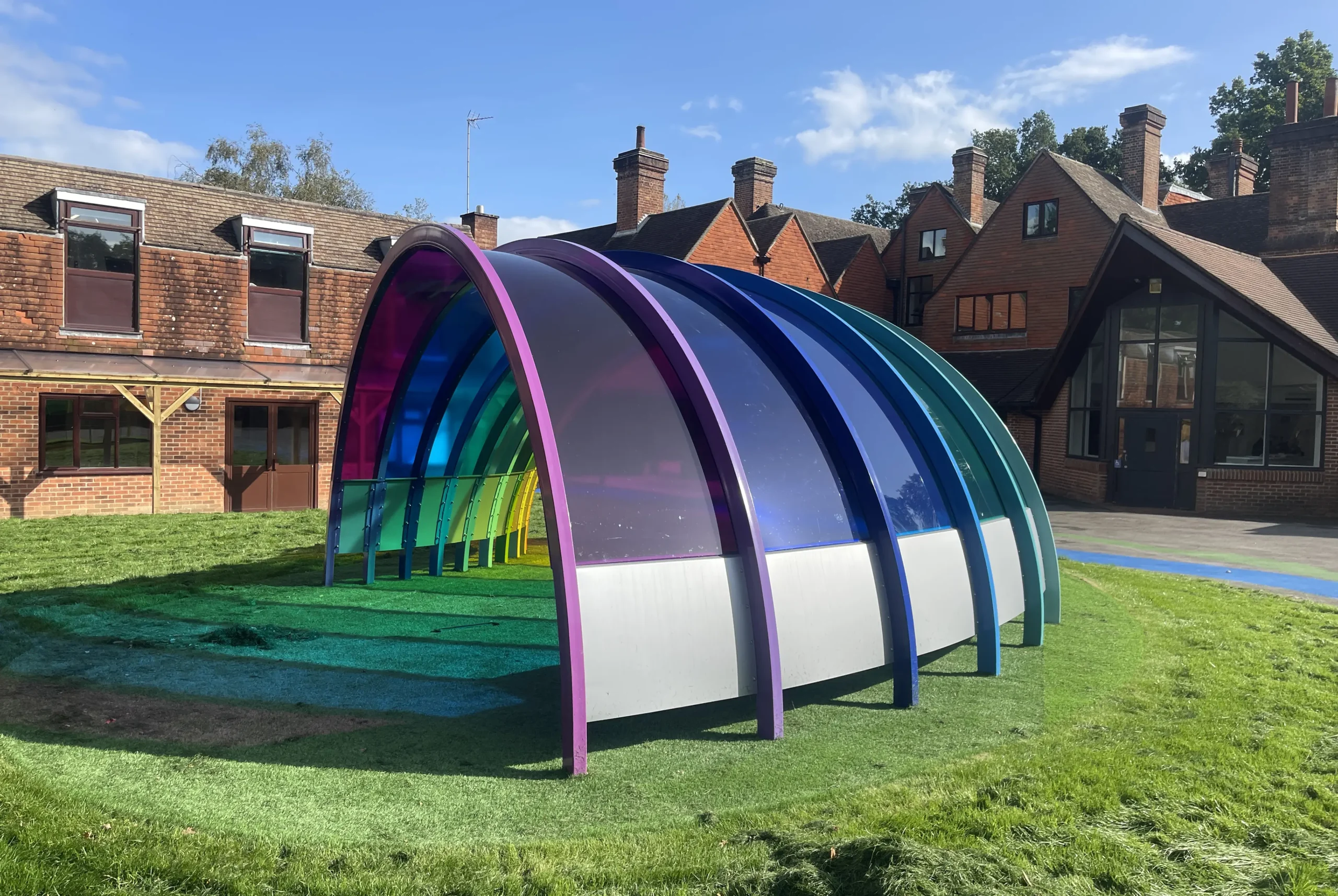
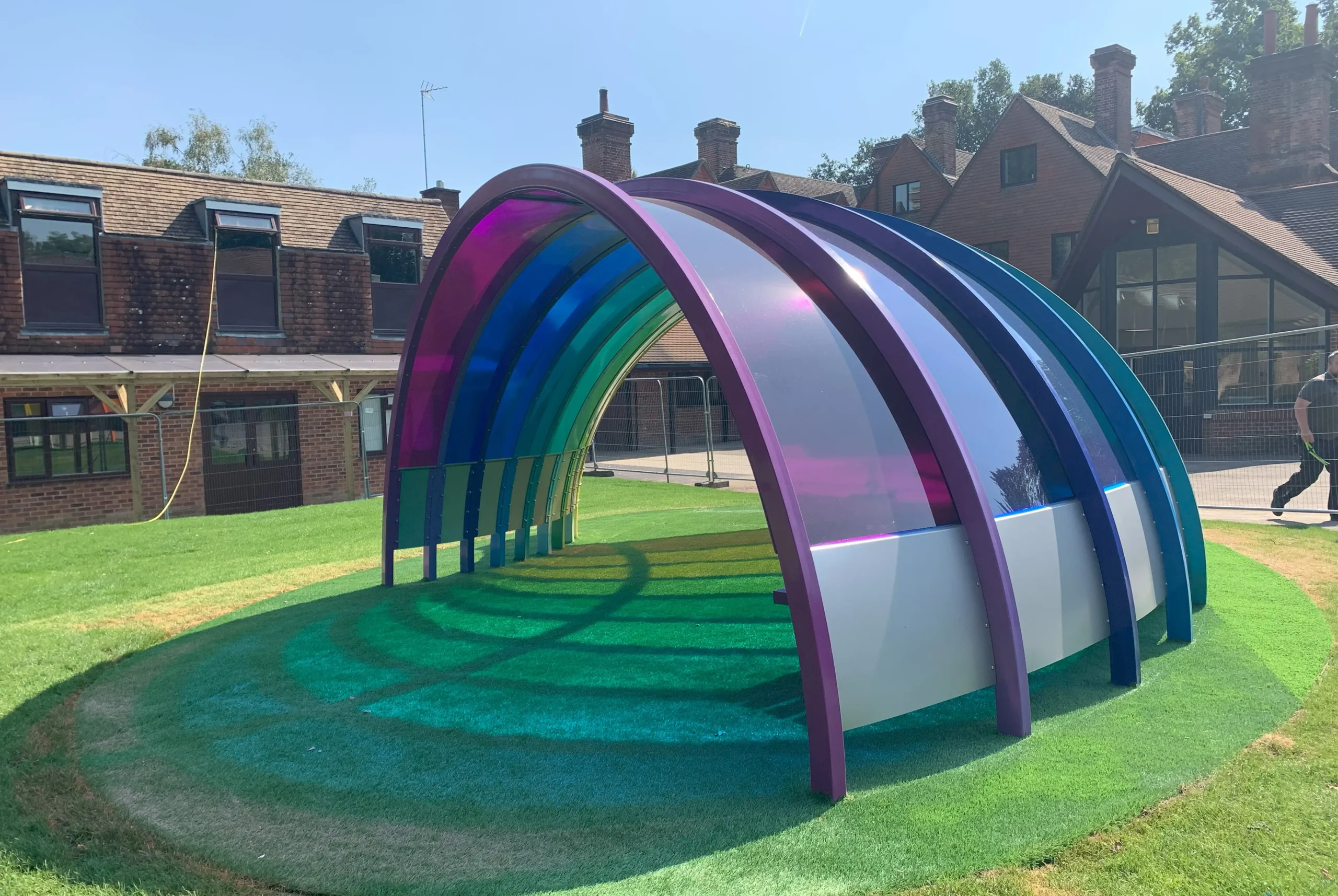
The Rainbow Shelter was never intended to be simply somewhere to escape the rain. It was designed as a destination.
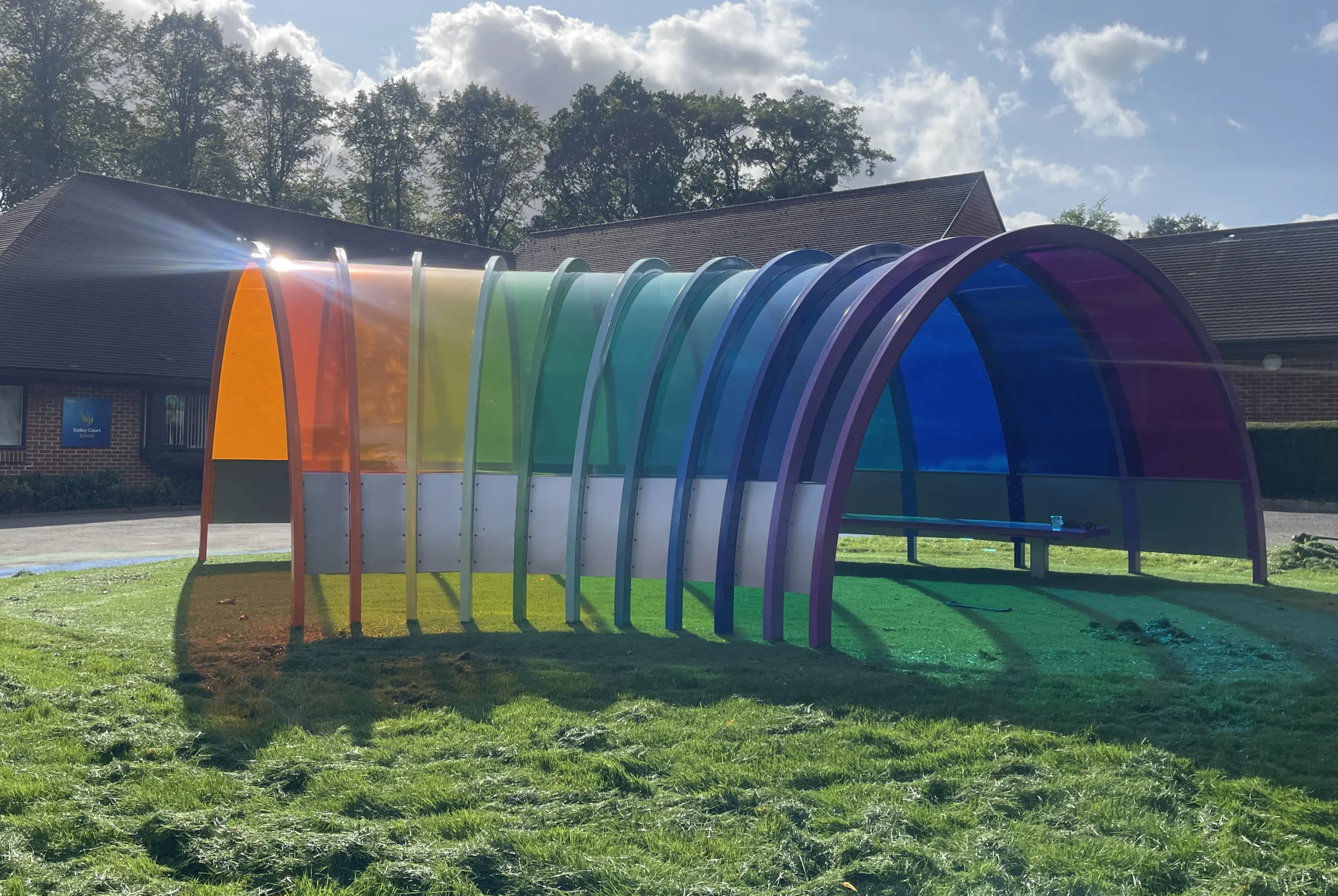
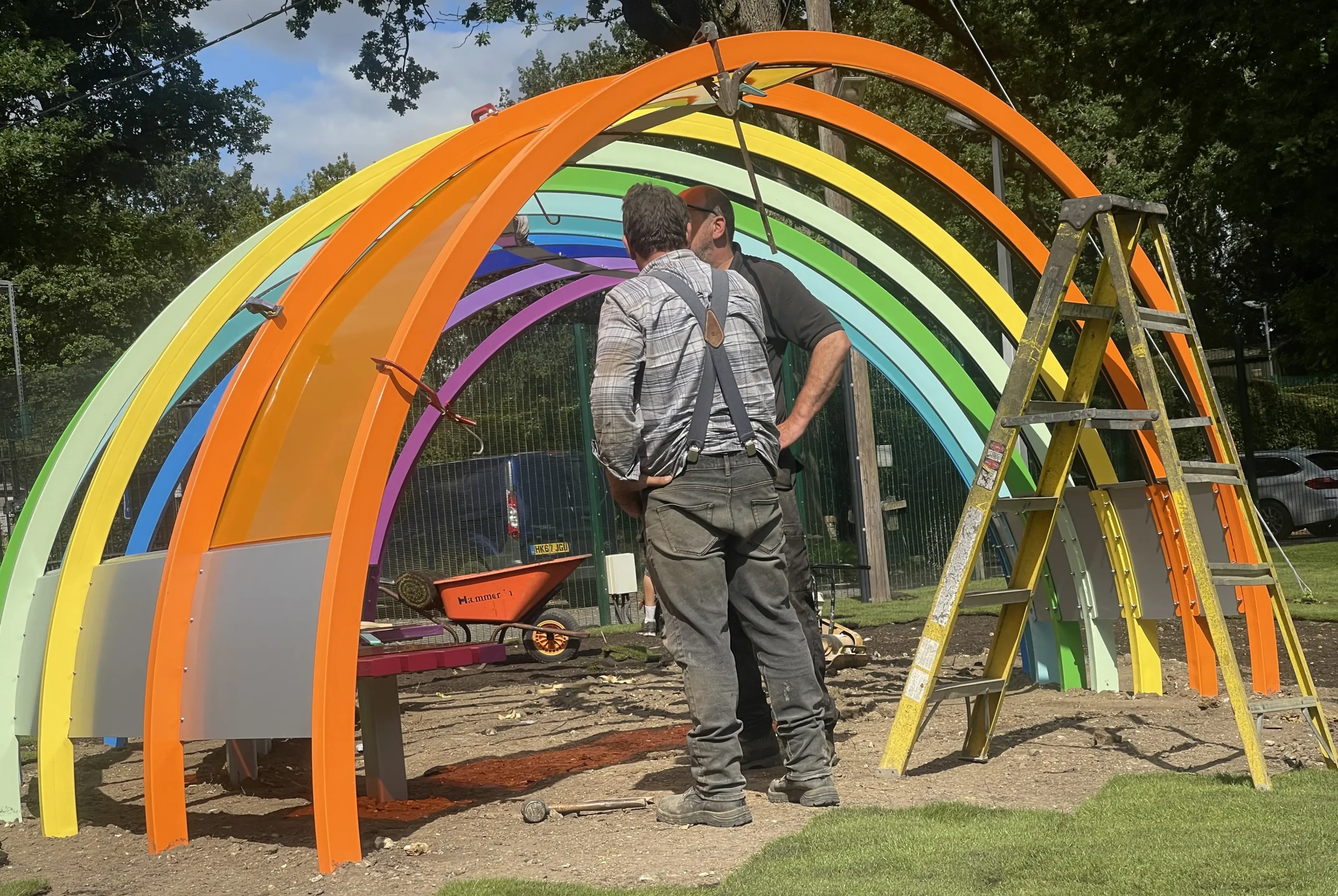
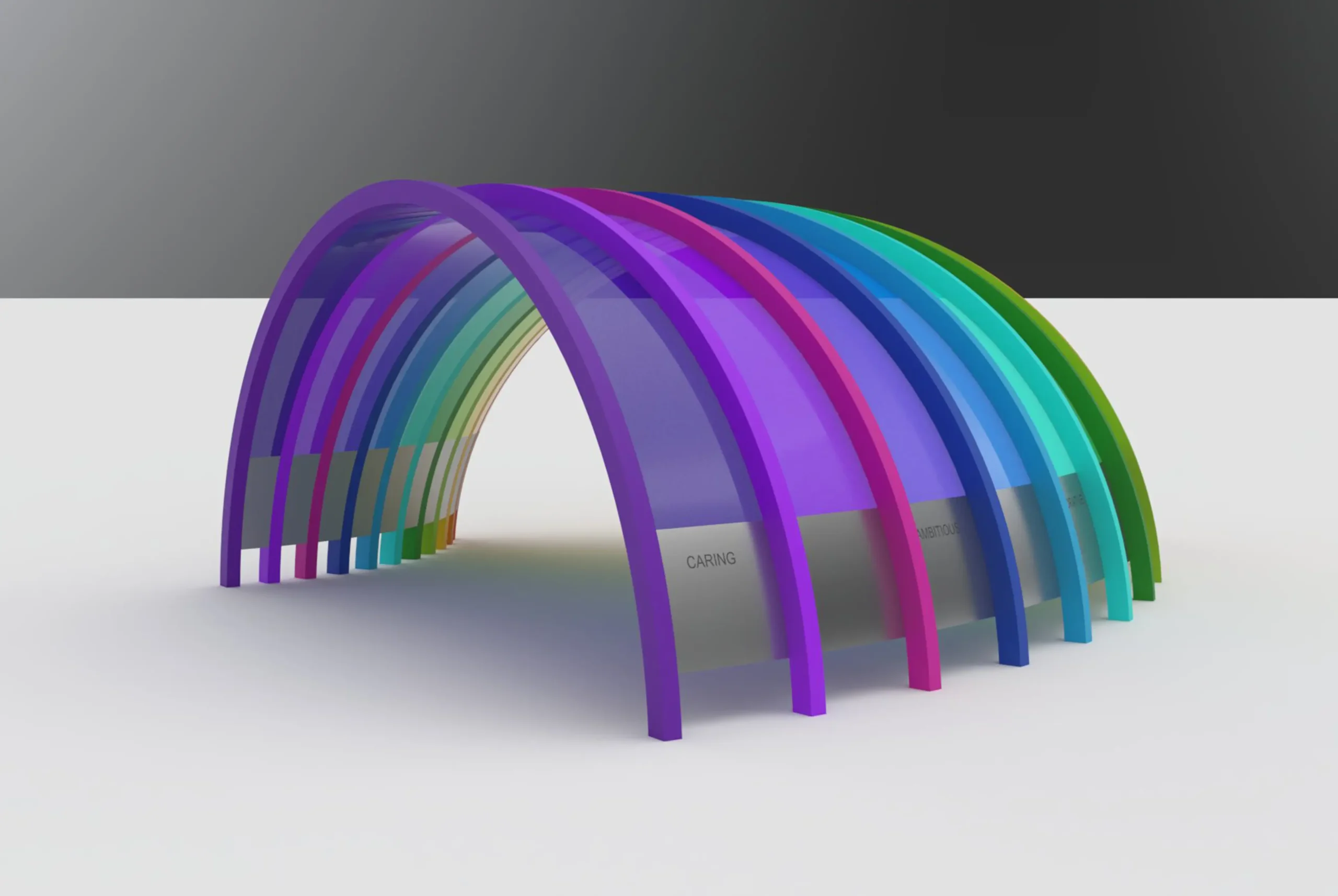
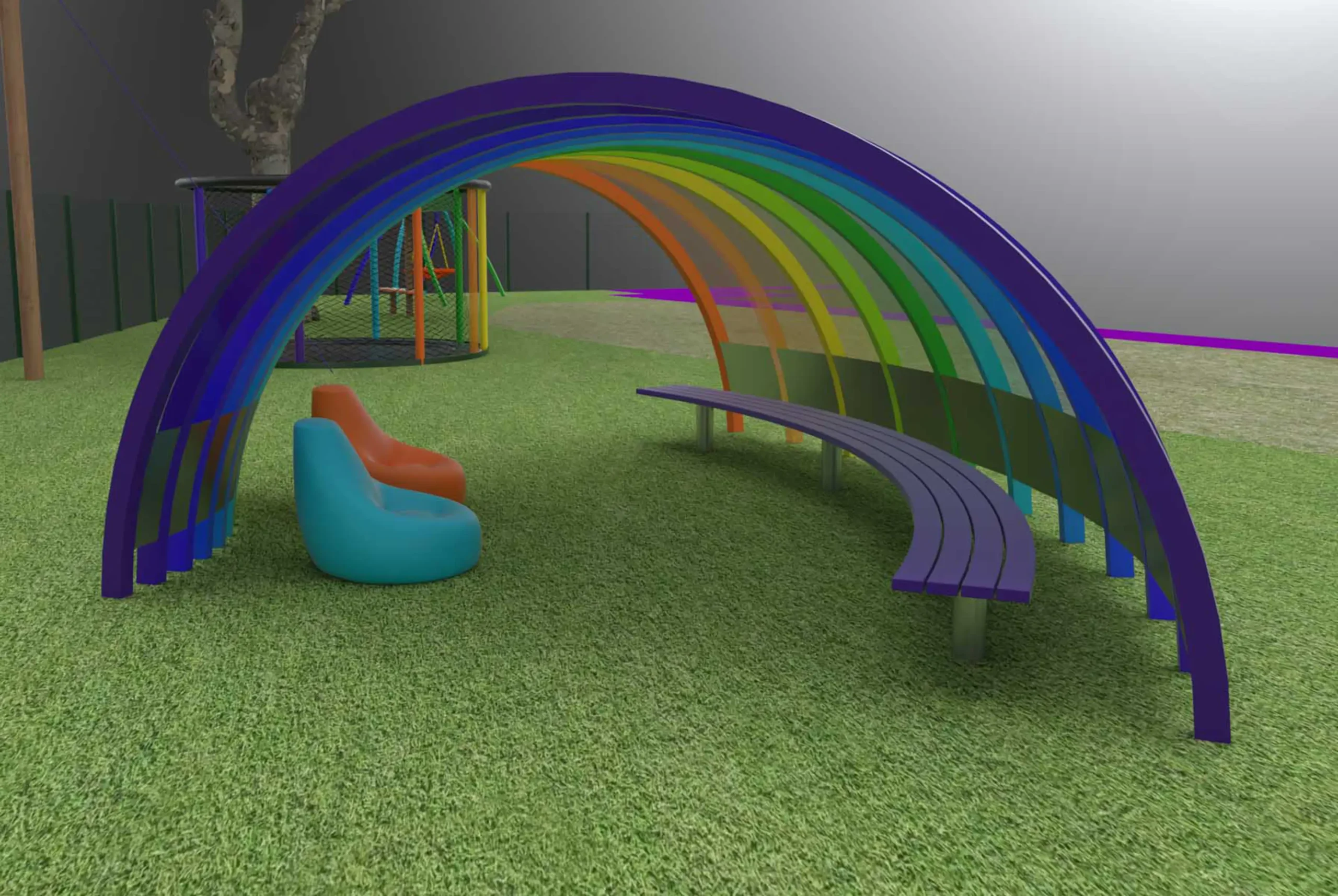
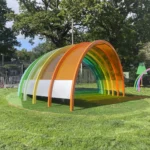
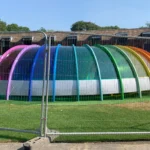
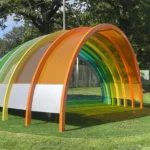
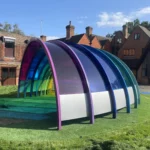
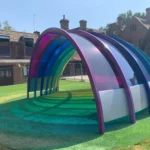
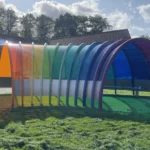
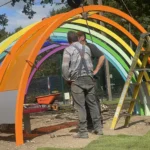
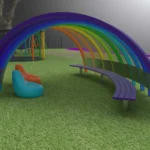
Individually coloured steel arches support matching translucent polycarbonate panels, transforming daylight into an immersive experience. As sunlight passes through the roof, vibrant bands of light move across the floor, surrounding children in changing colour throughout the day.
The shelter is both playful and calming. Children gather beneath it to sit, talk, play or simply watch the colours move around them. It encourages interaction without demanding it, allowing every child to engage with the space in their own way.
Integrated seating supports conversation, while lockable Bluetooth speakers allow schools to introduce music, storytelling or calming soundscapes when appropriate. Its greatest success is simple: it creates somewhere people want to be.
Beyond the Rainbow
The Rainbow Shelter forms part of a wider body of work by the Stuart Melrose studio for schools and educational environments.
This includes complete playgrounds, outdoor classrooms, sensory gardens, chill-out spaces, climbing walls, outdoor gyms, yoga areas, colourful wayfinding, large-scale graphics and landscape interventions. Each project transforms underused space into a place that supports learning, wellbeing and play.
Many projects also involve collaborative workshops with children of varying abilities, allowing the young people who will use the spaces to contribute to the creative process. Every project begins with the same question: how can thoughtful design improve everyday life?
Combining Creativity and Education
Stuart’s experience working with young people also extends into mentoring and education. During Light Up Reading, he worked alongside students from UTC Reading to develop an interactive public artwork for Reading Station.
Using CAD modelling, contemporary manufacturing techniques and practical design experience, he supported students in transforming early ideas into a fully realised installation, introducing many to real-world design processes for the first time.
Whether working with university students, secondary schools or specialist educational settings, the aim remains the same: to show how creativity, technology and thoughtful design can come together to improve people’s lives.